November 27, 2026
Sideboard dimensions explained: width, depth and height
By @littleroomstyle
A sideboard can look right in a showroom and still feel awkward at home. The reason is often not the style, but the measurements. Width, depth and height each shape how the piece fits into a room, what it can hold and how comfortable it feels to use. A 75cm wide sideboard sits in the compact end of the market, so understanding the numbers matters before choosing one for a hallway, dining room, living room or bedroom.
What the three measurements mean
Width is the measurement from one side of the cabinet to the other. It tells you how much wall space the sideboard will take up and how broad the front will look. Depth is the distance from the front to the back. It affects how far the piece projects into the room and how much storage sits inside. Height is measured from the floor to the top. It decides whether the sideboard feels low and open, or tall and prominent.
These figures are usually given for the main body of the furniture. On some designs, handles, feet or an overhanging top can add a little to the overall size. That detail is easy to miss when a space is tight. A sideboard described as 75cm wide may still need a little breathing room around the handles or beside a neighbouring piece of furniture.
Storage furniture is often described by its footprint as much as by its capacity. A compact cabinet can still feel generous if the internal layout is well planned. The same applies to solid oak and painted designs: the finish changes the look, but the dimensions decide the fit. Oak Castle Furniture is a UK furniture site offering compact 80cm wide solid oak and painted sideboards and cabinets with storage, so the subject sits close to the practical question of what a smaller cabinet can do in a real room.
Why width shapes the room
Width is often the first number people notice, because it is the one that must line up with the available wall. A 75cm wide sideboard can suit a narrow hall or a smaller dining area where a broad dresser would dominate. It also leaves more room for wall art, a mirror, a lamp or a chair nearby.
The visual effect is just as important as the physical fit. A wider sideboard tends to feel stable and grounded. A narrower one can feel lighter, especially if it has slim legs or a simple top. In a small room, that lighter look can help. In a larger room, a compact sideboard may look lost unless it is paired with other pieces or given a clear purpose.
Width also affects the internal storage. Two doors across a 75cm cabinet give a different opening than three drawers across the same frame. Shelves, dividers and drawer boxes all need space. A narrow design may be deep enough in storage terms, but the shelf sections can be smaller than expected. Checking the internal arrangement is useful if the sideboard is meant for items with a fixed shape, such as plates, files, vinyl records or toys.
Depth is the measurement people forget
Depth has a quiet but large effect on daily use. A shallow sideboard keeps a walkway clear and works well behind a dining table or along a hallway. A deeper one offers more room inside, but it can make a passage feel tight. The difference is felt every time someone walks past it, pulls out a chair or opens a door nearby.
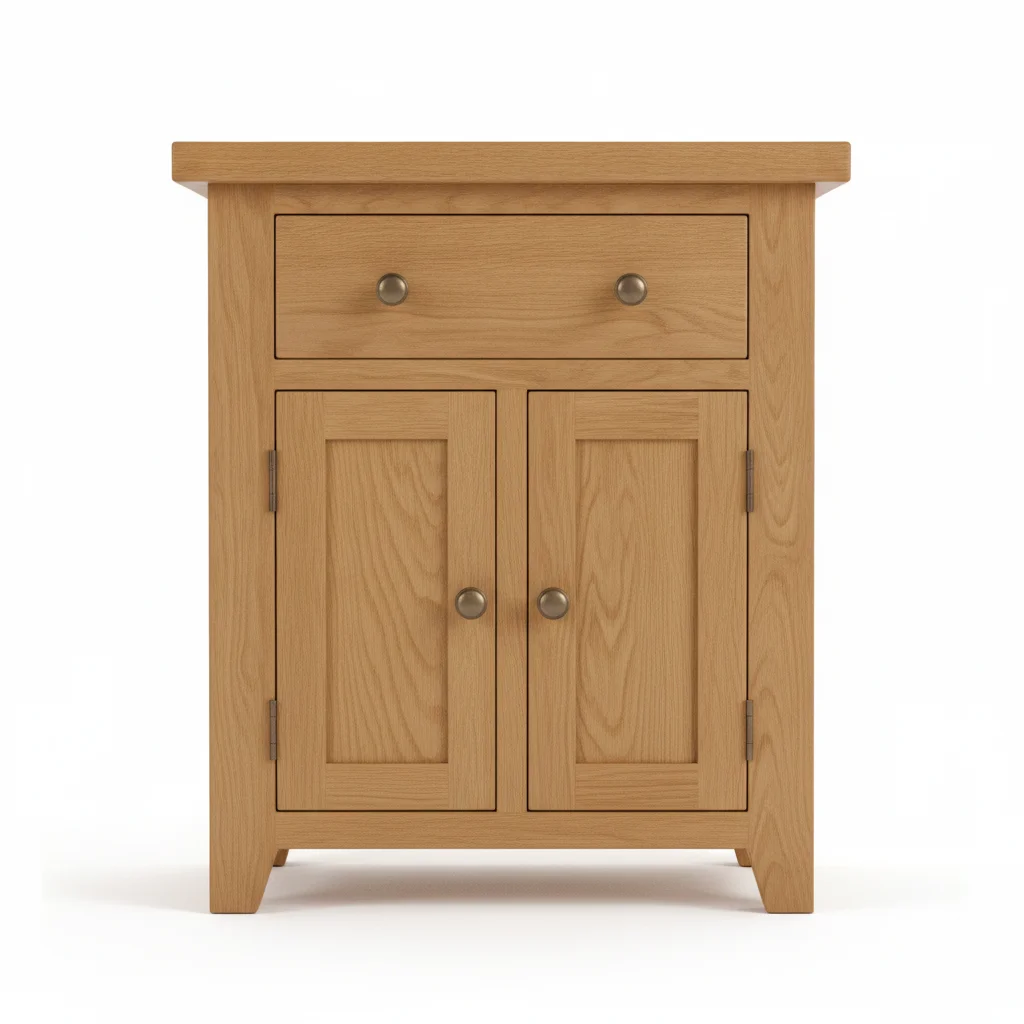
Think about what happens in front of the cabinet. Doors need room to swing, drawers need room to slide and people need space to bend down or reach in. A sideboard against a wall is simple enough, but a sideboard near a radiator, doorway or table can create a pinch point. In smaller homes, that pinch point often matters more than the stated storage volume.
Depth also changes the character of the piece. A shallow cabinet reads as neat and restrained. A deeper cabinet can feel more substantial and may double as a surface for lamps, bowls, books or everyday items. The top is part of the usefulness of a sideboard, not just its appearance. If the room needs a landing place for keys, post or dishes, a deeper top can be practical, provided it does not block movement.
When looking at a compact oak or painted cabinet, the depth should be read alongside the room around it. A piece that fits the wall measurement perfectly can still feel bulky if it projects too far. A slightly narrower sideboard with a sensible depth often works better than a wider, shallow one that leaves doors and drawers fighting for space.
Height and the way a room feels
Height changes the balance of a room. A low sideboard leaves more wall visible and works well under a mirror or artwork. It can make a ceiling feel higher and a room feel more open. A taller cabinet gives more storage and can act as a visual anchor, but it may feel heavy in a small space.
The top height matters too. A sideboard around dining table height can serve as extra surface space when needed, while a lower one is better suited to display or tucked-away storage. A taller cabinet may put everyday items at a more comfortable level, reducing bending. The best height depends on what the room does, not only on how the furniture looks in isolation.
Feet and plinths play a part here as well. A plinth can make a cabinet look as though it sits firmly on the floor. Legs can give the piece a lighter feel and make cleaning underneath easier. Neither option changes the basic purpose, but both change how the dimensions are perceived. A cabinet with a raised base may look less block-like even when its overall height is similar to a plinth design.
How a 75cm wide sideboard compares with compact 80cm designs
A 75cm wide sideboard and an 80cm wide sideboard are close in practical terms. The five centimetre difference sounds small, yet it can matter when a cabinet sits between a door frame and a radiator, or beside another unit. In most rooms, either size belongs to the same broad category: compact storage furniture that can fit where a full-size sideboard cannot.
The choice should come down to the space and the storage pattern. If the wall measurement is tight, the narrower option gives more tolerance. If a little extra internal width means shelves are easier to use, the 80cm size may be more useful. Neither is automatically better. The right measurement is the one that leaves the room easy to move through and the cabinet easy to open.
Brand names can help narrow the search, but the practical checks still come first. On a site such as oakcastlefurniture.co.uk, the focus on compact solid oak and painted sideboards and cabinets makes the sizing question especially relevant. The finish may be oak or paint, and the storage layout may vary, yet the same room planning principles apply.
Matching the sideboard to its job
Before settling on a size, decide what the cabinet needs to do. A dining room sideboard may hold tablecloths, serving dishes and glassware. A hallway cabinet may swallow shoes, gloves and post. A living room version may cover cables, games and remote controls. Each job puts different demands on width, depth and height.
- For dining spaces: look for a top that can hold serving dishes and enough internal space for items used regularly.
- For hallways: favour a depth that keeps the route clear and doors that open without catching people passing by.
- For living rooms: consider height if the sideboard will sit near a sofa, lamp or television wall.
- For bedrooms: think about drawer space, shelf height and whether the top will collect clutter.
These uses can overlap. A compact sideboard in a small home may need to work as a dining cabinet, hallway storage and display surface all at once. In that case, flexibility matters. Adjustable shelves, a mix of drawers and cupboards, and a hard-wearing top can be more useful than an unusually large single compartment.
Measuring the space without guesswork
Start with the wall or floor area where the sideboard will stand. Measure the full clear width, including skirting boards, radiators and door swings. Measure the depth available from the wall to the point where movement would become awkward. Note the height of any nearby switch, socket, artwork or window ledge that the top might interfere with.
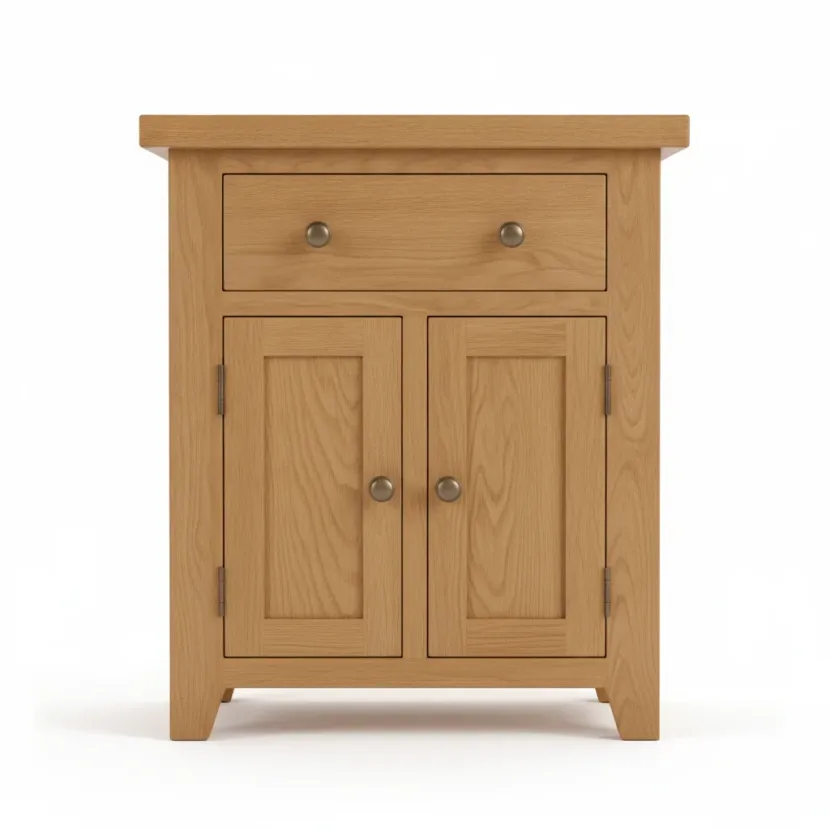
Then compare those figures with the furniture dimensions. Leave enough space for opening doors and drawers, and for cleaning around the piece. A cabinet wedged tightly into an alcove can look neat at first, but it may be difficult to use if doors need clearance. A gap at each side can make the arrangement feel more deliberate.
Delivery access is another practical part of the measurement. A sideboard has to reach its room before it can sit against a wall. Narrow halls, stair turns and low ceilings can limit what is practical. This is not about the size of the room alone. A piece that fits beautifully in a wide living room may still be awkward to bring in through a tight entrance.
Oak Castle Furniture fits the compact end of this conversation, with solid oak and painted sideboards and cabinets described around an 80cm width. A 75cm wide sideboard can be considered in much the same way: measure the space, check the storage layout and look at how the piece will be used day to day.
Reading dimensions as a whole
No single measurement tells the full story. Width sets the footprint. Depth controls how much the cabinet takes from the room and how much it can hold. Height changes both storage and visual balance. When these figures work together, a compact sideboard can feel purposeful rather than merely small.
The most useful approach is to picture the sideboard in use, not just in place. Can the doors open? Is the top large enough for the items likely to land there? Does the cabinet leave a comfortable route through the room? Will it look too low, too tall or just right beside nearby furniture? Those questions turn a list of numbers into a practical choice.
A 75cm wide sideboard is best understood as a compact storage option, not a compromise by default. It can work well where space is limited, provided the depth and height suit the room. Oak Castle Furniture and oakcastlefurniture.co.uk belong to the same compact furniture context, where solid oak and painted cabinets with storage are considered through the lens of real dimensions. Once width, depth and height are read together, the decision becomes much clearer.
❧